
Discover the Women of the Hall
These are the Inductees of the National Women’s Hall of Fame. Select any of the women to discover their stories and learn how they have influenced other women and this country.
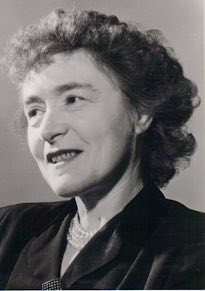 Gerty Theresa Radnitz Cori
Science
1896
Czech Republic
1998
Gerty Theresa Radnitz Cori
Science
1896
Czech Republic
1998
Gerty Theresa Radnitz Cori
First American woman to receive the Nobel Prize in science. Cori, along with her husband and Bernardo Houssay of Argentina, received the award in 1947 “for their discovery of the course of the catalytic conversion of glycogen.” Their work, the first bioengineering of a large biological molecule in a test tube, became the foundation for our understanding of how cells use food and convert it to energy.
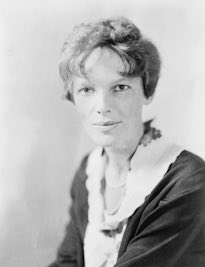 Amelia Earhart
Science
1897
Kansas
1973
Amelia Earhart
Science
1897
Kansas
1973
Amelia Earhart
The first woman to fly across the Atlantic Ocean, and the first to fly solo across the Pacific Ocean. Earhart was a strong individual who inspired other women to take risks in non-traditional arenas.
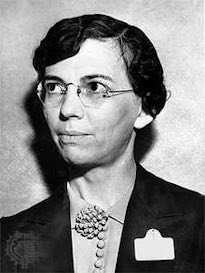 Florence B. Seibert
Science
1897
1990
Florence B. Seibert
Science
1897
1990
Florence B. Seibert
Scientist who made it possible to test for tuberculosis and who pioneered safe intravenous therapy. Siebert also devoted many years to cancer research.
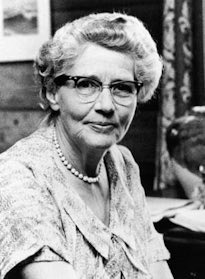 Helen Brooke Taussig
Science
1898
Massachusetts
1973
Helen Brooke Taussig
Science
1898
Massachusetts
1973
Helen Brooke Taussig
As Chief of the heart clinic at Johns Hopkins School of Medicine, she developed a pioneering operation in 1944 which solved the often fatal “blue baby” (children born with an anatomical heart defect) problem, saving countless infants.
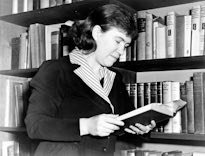 Margaret Mead
Science
1901
1976
Margaret Mead
Science
1901
1976
Margaret Mead
Trailblazing anthropologist whose book, Coming of Age in Samoa, caused scientific and social rethinking of adolescence. Mead’s career included the study of numerous tribes as well as extensive and innovative field work.
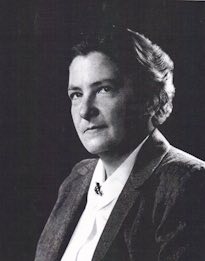 Dorothy H. Andersen
Science
1901
North Carolina
2001
Dorothy H. Andersen
Science
1901
North Carolina
2001
Dorothy H. Andersen
Pediatrician and pathologist who was the first to identify cystic fibrosis and developed a simple, definitive diagnostic test for the disease.
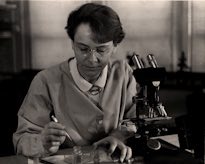 Barbara McClintock
Science
1902
1986
Barbara McClintock
Science
1902
1986
Barbara McClintock
Geneticist who pioneered work in maize genetics and the complex mechanisms which control and regulate cell development. McClintock helped to advance scientific understanding of this important field. In 1983 she received the first unshared Nobel Prize in medicine ever awarded to a woman.
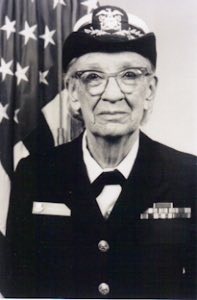 Grace Hopper
Science
1906
New York
1994
Grace Hopper
Science
1906
New York
1994
Grace Hopper
A mathematics genius and computer pioneer, Grace Hopper created computer programming technology that forever changed the flow of information and paved the way for modern data processing. In 1952, Hopper was credited with creating the first compiler for modern computers, a program that translates instructions written by a programmer into codes that can be read by a computer. Hopper was the first woman to hold the rank of Rear Admiral in the U.S. Navy.
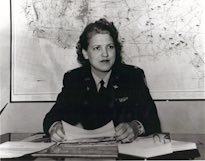 Jacqueline Cochran
Science
1906
1993
Jacqueline Cochran
Science
1906
1993
Jacqueline Cochran
First woman aviator to break the sound barrier. A leader and pilot, Cochran held many speed, distance and altitude records. She led the Women’s Air Force Service Pilots during World War II, becoming the first woman to pilot a bomber across the Atlantic Ocean.
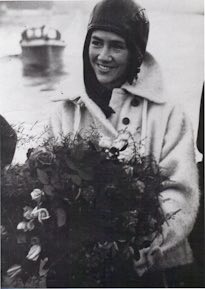 Anne Morrow Lindbergh
Arts, Science
1906
1996
Anne Morrow Lindbergh
Arts, Science
1906
1996
Anne Morrow Lindbergh
Author of numerous elegant essays, journals and other books. Lindbergh also excelled as co-pilot and navigator with her husband Charles on their historic flights to promote the development of international aviation.
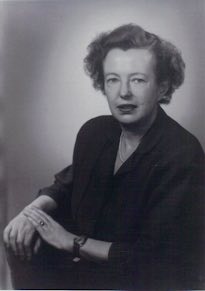 Maria Goeppert-Mayer
Science
1906
Germany
1996
Maria Goeppert-Mayer
Science
1906
Germany
1996
Maria Goeppert-Mayer
First U.S. woman and second woman ever to win the Nobel Prize in Physics. The Prize was awarded for developing the shell model of the nucleus of the atom, the basic model for the description of nuclear properties. Mayer was also a member of the team that first isolated fissionable uranium 235.
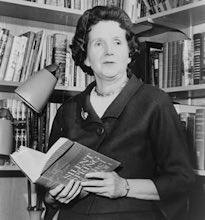 Rachel Carson
Science
1907
Pennsylvania
1973
Rachel Carson
Science
1907
Pennsylvania
1973
Rachel Carson
Zoologist whose concern over the damaging effects of pesticides and other poisons on the environment led to her groundbreaking work, Silent Spring. Carson’s book was a catalyst for the environmental movement of today.
 Ruth Patrick
Science
1907
Kansas
2009
Ruth Patrick
Science
1907
Kansas
2009
Ruth Patrick
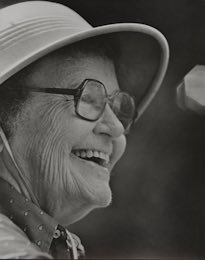
A pioneer in the field of limnology – the scientific study of the life and phenomena of fresh water, especially lakes and ponds – Ruth Patrick provided methods needed to monitor water pollution and understand its effects. Patrick is credited, along with Rachel Carson, as being largely responsible for ushering in the current worldwide concerns with ecology. She was the first female elected chair of the board of the Academy of Natural Sciences and received the National Medal of Science in 1996.
 Virginia Apgar
Science
1909
New Jersey
1995
Virginia Apgar
Science
1909
New Jersey
1995
Virginia Apgar
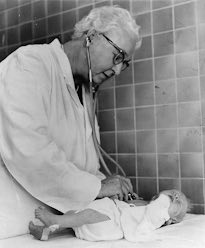
Physician best known for development of the Apgar Score in 1952. This system of simple tests is used to determine whether a newborn child requires special medical attention, and it has saved thousands of lives.
 Annie Dodge Wauneka
Science
1910
Arizona
2000
Annie Dodge Wauneka
Science
1910
Arizona
2000
Annie Dodge Wauneka
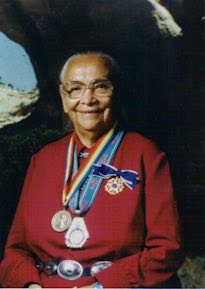
First woman elected to the Tribal Council, she became determined to lead the fight against tuberculosis among the Navajo. She wrote a dictionary to translate English words for modern medical techniques into Navajo, and hosted a radio broadcast in the Navajo language to explain how modern medicine could help in better care for pregnant women and new babies and other family health problems.
 Chien-Shiung Wu
Science
1912
China
1998
Chien-Shiung Wu
Science
1912
China
1998
Chien-Shiung Wu
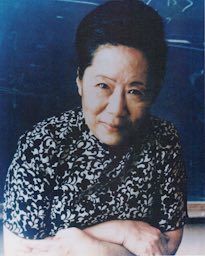
Nuclear physicist whose pioneering work altered modern physical theory and changed the accepted view of the structure of the universe.
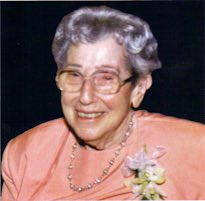 Mildred Cohn
Science
1913
New York
2009
Mildred Cohn
Science
1913
New York
2009
Mildred Cohn
A groundbreaking scientist in several important areas of biological research, Mildred Cohn pioneered research that helped form the scientific understanding of mechanisms of enzymatic reactions and the methods of studying them. In 1946, she introduced the use of isotopic oxygen 18 to study metabolic processes and enzyme mechanisms. She later applied nuclear magnetic resonance (NMR) and electron paramagnetic resonance (EPR) to investigate metabolism and metabolic intermediates. Cohn has published more than 150 scientific papers and has received several awards for her work, including the National Medal of Science in 1982.
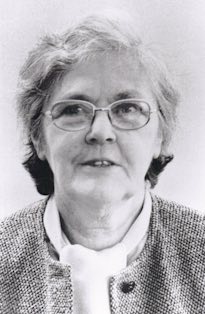 Frances Oldham Kelsey
Science
1914
Canada
2000
Frances Oldham Kelsey
Science
1914
Canada
2000
Frances Oldham Kelsey
A medical and pharmaceutical researcher for the Food and Drug Administration, she refused to approve the use of thalidomide in this country, saving countless babies from terrible deformities. As a result of her testimony before Congress, the 1962 drug act was passed, giving the FDA greater control over the manufacture, testing and distribution of drugs. During a career with the FDA which spanned over 39 years, her supervision of clinical investigators has institutionalized the protection of the patient in drug investigations.
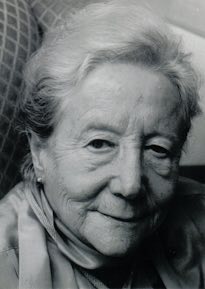 Florence Wald
Science
1916
New York
1998
Florence Wald
Science
1916
New York
1998
Florence Wald
Former dean of the Yale School of Nursing and founder of the Hospice movement in America, for which she was awarded the honorary Doctorate of Medical Sciences by Yale University in 1995. As a nurse, she went to Europe to study Hospice from the ground up.
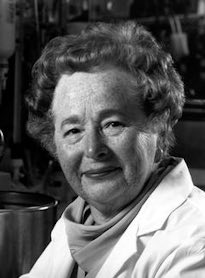 Gertrude Belle Elion
Science
1918
1991
Gertrude Belle Elion
Science
1918
1991
Gertrude Belle Elion
1988 Nobel Prize winner who spent a lifetime creating drugs to combat leukemia, gout, malaria, herpes and other auto-immune diseases. Elion’s work saved many lives, and led to the development of the first major AIDS drug AZT.
 Katherine Johnson
Science
1918
West Virginia
2021
Katherine Johnson
Science
1918
West Virginia
2021
Katherine Johnson
 Faye Glenn Abdellah
Science
1919
New York
2000
Faye Glenn Abdellah
Science
1919
New York
2000
Faye Glenn Abdellah
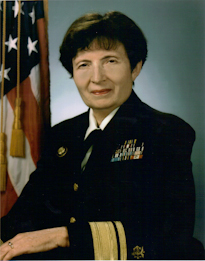
First nurse to hold the rank of Rear Admiral and the title of Deputy Surgeon General for the United States. She developed the first tested coronary care unit. A national pioneer in nursing research, she has authored or co-authored more than 150 publications and helped change the focus of nursing from disease-centered to patient-centered.
 Beatrice A. Hicks
Science
1919
New Jersey
2001
Beatrice A. Hicks
Science
1919
New Jersey
2001
Beatrice A. Hicks
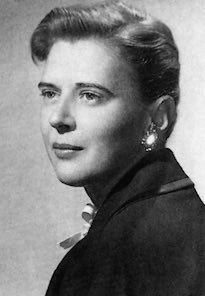
Engineer, inventor, and business owner, Beatrice Hicks was a pioneer in gaining recognition for women engineers at a time when less than 1% of all U.S. employed engineers were women. She was a founding member and first president of the Society of Women Engineers (1950), which now has a membership of more than 16,000.
 Loretta C. Ford
Science
1920
New York
2011
Loretta C. Ford
Science
1920
New York
2011
Loretta C. Ford
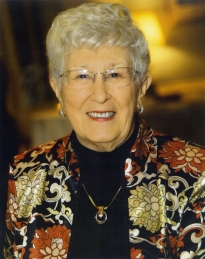
An internationally renowned nursing leader, Dr. Loretta C. Ford has devoted her career to practice, education, research, consultation and the delivery of health services. Dr. Ford is best known for co-founding the nurse practitioner model through her studies on the nurse’s expanded scope of practice in public health nursing. In 1972, Dr. Ford became the founding dean of the University of Rochester School of Nursing, where she implemented the unification model. Dr. Ford is the author of more than 100 publications and has served as a consultant and lecturer to multiple organizations and universities.