Discover the Women of the Hall
These are the Inductees of the National Women’s Hall of Fame. Select any of the women to discover their stories and learn how they have influenced other women and this country.
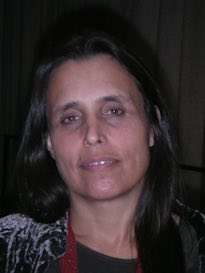 Winona LaDuke
Humanities
1959
California
2007
Winona LaDuke
A graduate of Harvard and Antioch Universities, Winona LaDuke advocates for public support and funding for frontline native environmental groups. In 1994, she was nominated by Time Magazine as one of America’s most promising leaders under forty years of age. In 1998, she was named Ms. Magazine Woman of the Year. Ms. LaDuke was the vice-presidential candidate on the Green Party ticket in both 1996 and 2000. She currently serves as director of the White Earth Land Recovery Project in Minnesota.
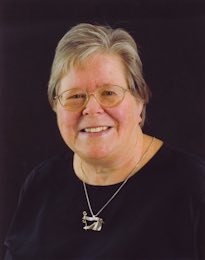 Judith L. Pipher
Education, Science
1940
Canada
2007
Judith L. Pipher
The first female to pursue infrared and submillimieter astronomy into ultra sensitive light detection of celestial bodies, Dr. Judith Pipher is a highly regarded infrared astronomer. As a professor with the University of Rochester for 31 years, she founded a group of observational infrared astronomers who took the first telescopic infrared pictures of starburst galaxies. Dr. Pipher was also instrumental in designing aspects of the NASA Spitzer Space Telescope, launched in 2003.
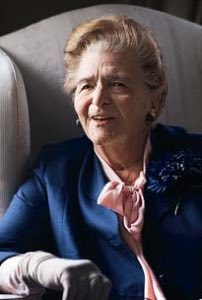 Catherine Filene Shouse
Arts, Philanthropy
1896
Massachusetts
2007
Catherine Filene Shouse
Known for her visionary work in education, arts, politics and women’s affairs, Catherine Filene Shouse was the first woman to receive a Masters Degree in Education from Harvard University and the first woman appointed to the Democratic National Committee in 1919. Ten years later, she launched the Institute for Women’s Professional Relations. An ardent supporter of the arts and arts education, Catherine Filene Shouse founded and was the major benefactor of the Wolf Trap National Park for the Performing Arts in Vienna, Virginia – the first and only national park dedicated to the performing arts. She was awarded the Presidential Medal of Freedom by President Gerald R. Ford in 1977.
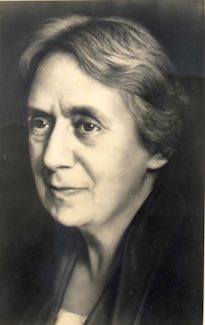 Henrietta Szold
Humanities
1860
Maryland
2007
Henrietta Szold
The daughter of Hungarian immigrants, educator and social pioneer Henrietta Szold was an important figure in both American and Jewish history. In 1889, she opened a night school to educate immigrants in English and civics, creating a model for other night schools and immigrant education programs. Her groundbreaking work in the American Jewish community continued with her founding of Hadassah, the Women’s Zionist Organization of America, in 1912. Ms. Szold moved to pre-state Israel in 1920, continuing her work with the American Zionist Medical Unit, which she organized in 1918.
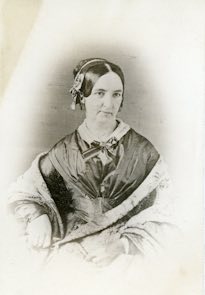 Martha Coffin Pelham Wright
Humanities
1806
Massachusetts
2007
Martha Coffin Pelham Wright
Martha Coffin Pelham Wright was one of five visionary women who organized the first women’s rights convention in Seneca Falls, New York in 1848, forever changing the course of American history. She was also one of the few women who attended the 1833 founding meeting of the American Anti-Slavery Society. An accomplished author, she wrote for local and national publications on anti-slavery and women’s rights issues. She was elected President of the National Woman Suffrage Association in 1874, serving until her death in 1875.
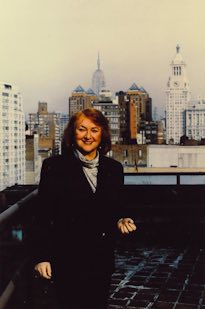 Eleanor K. Baum
Education, Science
1940
New York
2007
Eleanor K. Baum
As the former Dean of Engineering at Cooper Union and the Executive Director of the Cooper Union Research Foundation, Dr. Eleanor Baum is the first female engineer to be named dean of a college of engineering in the United States. In 1995, she became the first female president of the American Society for Engineering Education. An electrical engineer who has worked in the aerospace industry, Dr. Baum is a respected leader in recruitment and retention of women in the engineering profession.
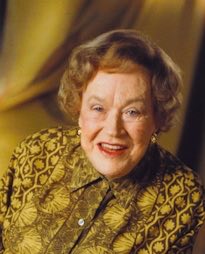 Julia Child
Arts
1912
California
2007
Julia Child
A graduate of Smith College, Julia Child went on to attend classes at Le Cordon Bleu in Paris. The famous American cook, author, and television personality introduced French cuisine and cooking techniques to America through her cookbooks and television programs. Her most famous works include the 1961 cookbook Mastering the Art of French Cooking and the television series The French Chef, which premiered in 1963. She is widely credited with demystifying the art of fine cooking.
 Swanee Hunt
Philanthropy
1950
Texas
2007
Swanee Hunt
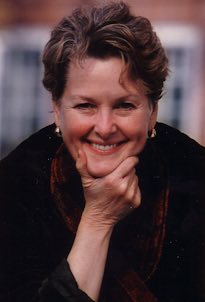
Swanee Hunt is the former Director of the Women and Public Policy Program at Harvard University’s Kennedy School of Government. An internationally recognized expert on foreign affairs and diplomacy, Hunt is heralded for her trailblazing work to increase the participation and inclusion of women in peace processes around the world. She is also President of Hunt Alternatives Fund, a private foundation committed to advancing social change at local, national and global levels.
 Elisabeth Kübler-Ross
Science
1926
Switzerland
2007
Elisabeth Kübler-Ross
After graduating from the University of Zurich medical school, Dr. Elisabeth Kübler-Ross married and moved to the United States. She began working in hospitals, where she was appalled at the treatment of terminally ill patients. Her 1969 bestseller On Death and Dying revolutionized the medical profession’s treatment and understanding of dying patients, serving as a voice for the rights of the terminally ill. Her work was a catalyst for now commonly accepted ideas such as hospice care, living wills, and death with dignity.
 Rita Rossi Colwell
Science
1934
Massachusetts
2005
Rita Rossi Colwell
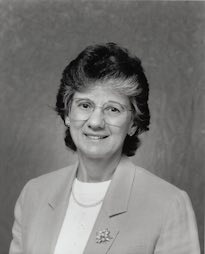
Dr. Rita R. Colwell became the first woman and first biologist to head the National Science Foundation in 1998, spearheading the agency’s emphases in K-12 science and mathematics education, graduate science and engineering education/training and the increased participation of women and minorities in science and engineering.
 Blanche Stuart Scott
Science
1889
New York
2005
Blanche Stuart Scott
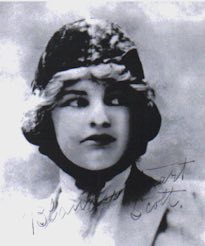
Born in Rochester, New York, Scott was a pioneering aviatrix, becoming the first American woman to take a solo hop into the air, although her flight is not regarded as official. In 1910, she became one of the first woman to drive an automobile coast to coast in her car – the ‚”Lady Overland”. Scott was also the first and only woman to take flying lessons from Glenn Curtiss, later flying with the Curtiss Exhibition Team and earning the nickname ‚”Tomboy of the Air”.
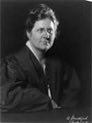 Florence Ellinwood Allen
Government
1884
Utah
2005
Florence Ellinwood Allen
Judge Florence Ellinwood Allen was a legal pioneer, breaking barriers for women in law. Her numerous accomplishments include becoming the first American woman to hold the office of Assistant County Prosecutor, first woman judge of the highest court of a state by election (Ohio), and first female judge of a United States Circuit Court of Appeals by presidential appointment.
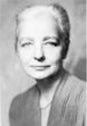 Ruth Fulton Benedict
Science
1887
New York
2005
Ruth Fulton Benedict
A student of Franz Boas and mentor to Margaret Mead, Ruth Fulton Benedict was a highly influential anthropologist whose theories tremendously influenced the field of cultural anthropology. Her 1934 Patterns of Culture became an American classic and is still a highly regarded publication today.
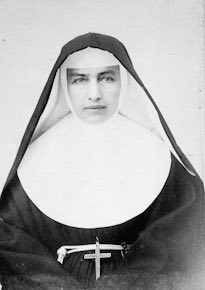 Mother Marianne Cope
Humanities
1838
Germany
2005
Mother Marianne Cope
As a Sister of the Third Order of St. Francis, Mother Marianne Cope worked for several years in Syracuse, New York, helping to found St. Joseph’s Hospital. In 1883, she went to Kalaupapa, Hawaii where she spent thirty years ministering to those with leprosy. While in Hawaii, she worked hand in hand with Father Damien during the last part of his life.
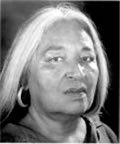 Patricia A. Locke
Education
1928
Idaho
2005
Patricia A. Locke
Locke worked for decades to preserve American Indian languages and became a pioneer in an effort to grant the tribes greater authority in the education of their children. Locke was a 1991 MacArthur Fellow for her work to save dying tribal languages. In 1993, she became the first Native American woman elected to the national governing body of the Baha’i faith.
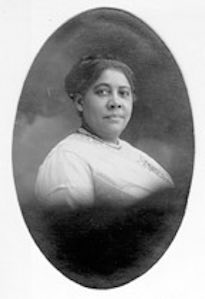 Mary Burnett Talbert
Humanities
1866
Ohio
2005
Mary Burnett Talbert
Civil Rights activist and suffragist, Talbert was the first African-American high school principal in the state of Arkansas. Moving to Buffalo in 1891, she went on to lecture internationally on race relations and women’s rights. In 1905, she helped found and organize the Niagara Movement, a forerunner of the NAACP.
 Hillary Rodham Clinton
Government
1947
Illinois
2005
Hillary Rodham Clinton
Hillary Rodham Clinton is the first First Lady ever to be elected to the United States Senate. She is the first woman Senator from New York. Her efforts on behalf of women’s, family and children’s issues began during her earliest employment as an attorney and remain steadfast today. Senator Clinton is the first New York State Senator to serve on the Senate Armed Services Committee.
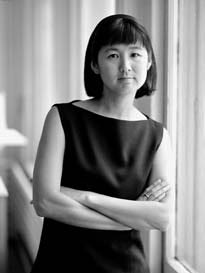 Maya Y. Lin
Arts
1959
Ohio
2005
Maya Y. Lin
Lin, an architectural designer who gained fame at the age of 21 as creator of the Vietnam Veteran’s Memorial, is a Chinese-American who draws on a variety of culturally diverse sources for her inspiration. Some of her well-known works include the Civil Rights Memorial at the Southern Poverty Law Center in Montgomery, AL and The Wave Field at the University of Michigan.
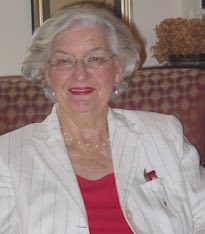 Betty Bumpers
Humanities
1925
Arkansas
2005
Betty Bumpers
Former first lady of Arkansas, Betty Bumpers dedicated herself to world peace and health initiatives for children across the United States. As First Lady of Arkansas, Mrs. Bumpers spearheaded an immunization program in her state that became a national model. She also co-founded Every Child by Two with Rosalynn Carter, a national immunization program. Mrs. Bumpers was active in the global campaign to eradicate polio.
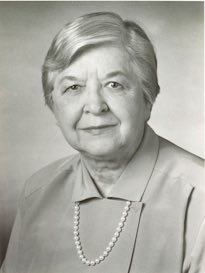 Stephanie L. Kwolek
Science
1923
Pennsylvania
2003
Stephanie L. Kwolek
Interested in science and medicine from a young age, Kwolek graduated from Carnegie Institute of Technology and then took a job at DuPont Chemicals to save for graduate studies. However, her love of working with polymers kept her at DuPont, where she discovered the fiber that led to the development of Kevlar, a bulletproof material five times stronger than steel. Kwolek is the recipient or co-recipient of 17 U.S. patents.
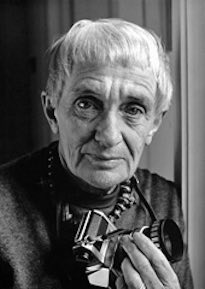 Dorothea Lange
Arts
1895
New Jersey
2003
Dorothea Lange
Lange was a pioneer in documentary photography, remembered for her wide-ranging photographs of Americans during the depression and the Japanese-American internment during World War II, and for her later work in Asia. She put a human face on political issues of the day, such as poverty and social injustice. Lange was the first woman awarded a Guggenheim Fellowship in photography in 1940.
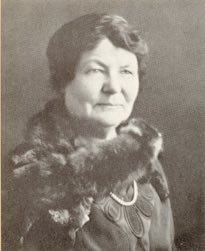 Martha Matilda Harper
Business
1857
Canada
2003
Martha Matilda Harper
After 25 years of low-wage service, Martha Matilda Harper started a beauty products system called the Harper Method, eventually realizing over 500 franchises world-wide in the 1920s. Harper is credited with creating the modern retail franchising method. She was also known as a social justice advocate ahead of her time, offering evening hours for working women, profit-sharing and personal time off. She refused to use permanents or hair dyes in her salons because of the associated chemicals.
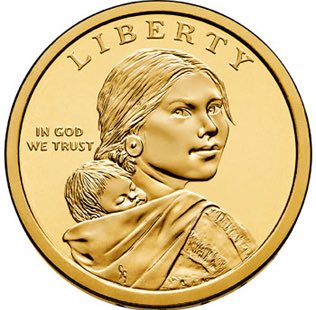 Sacagawea / Sacajawea / Sakakawea
Humanities
c.1788
Idaho
2003
Sacagawea / Sacajawea / Sakakawea
A Shoshone woman who served as a guide to Lewis and Clark during their exploration of the American West, Sacagawea was an instrumental part in the success of this legendary Expedition.
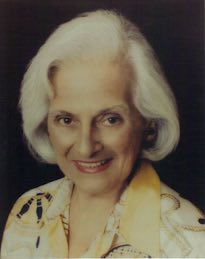 Mildred Robbins Leet
Philanthropy
1922
New York
2003
Mildred Robbins Leet
As Co-founder and Chairman of the Trickle Up Program, Inc., philanthropist Mildred Leet assisted people worldwide in rising out of poverty. Trickle Up provides seed capital to impoverished individuals, allowing them the opportunity to work their way to self-sufficiency. Leet also helped found United Cerebral Palsy and was a co-founder and Vice President of the U.S. Committee for the United Nations Development Fund for Women (UNIFEM).