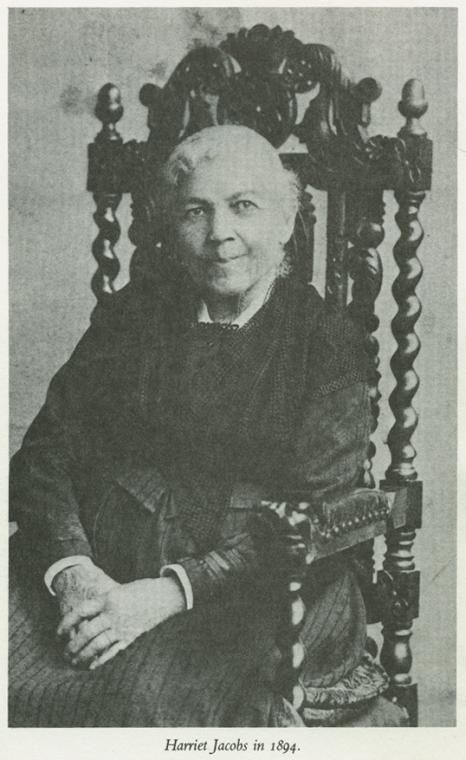
Harriet Jacobs was one of the most important writers of the antebellum African American and American women’s literary tradition. Born into slavery in 1813 in Edenton, North Carolina, she endured years of physical and sexual threats before making a daring bid for freedom—hiding for nearly seven years in a crawl space above her grandmother’s home to protect herself and secure her children’s future.
After escaping to the North in 1842, Jacobs lived as a fugitive while working, raising her children, and building ties within abolitionist circles. Nearly two decades later, with the support of Lydia Maria Child, she published her pathbreaking personal narrative, Incidents in the Life of a Slave Girl, becoming the first formerly enslaved African American woman to publish a full-length autobiography.
During the Civil War, Jacobs became a tireless advocate and relief agent for those who had escaped bondage. She traveled in 1862 to Washington, D.C., and Alexandria on behalf of William Lloyd Garrison’s The Liberator, returning in 1863 with aid from Quaker networks. There, she partnered with Julia Wilbur to challenge military authorities and advocate for humane conditions, including protesting plans to house orphans in a smallpox hospital, and in 1864 co-founded the Jacobs Free School with her daughter.
A decade later, Jacobs moved to Cambridge, Massachusetts, where she managed boardinghouses and built a multiracial community of care; she later opened a charitable boardinghouse in Washington, D.C. Her legacy is one of interlaced intellectualism, activism, and community building in service of freedom, equality, and care for others.
Photo courtesy of New York Public Library Digital Collections