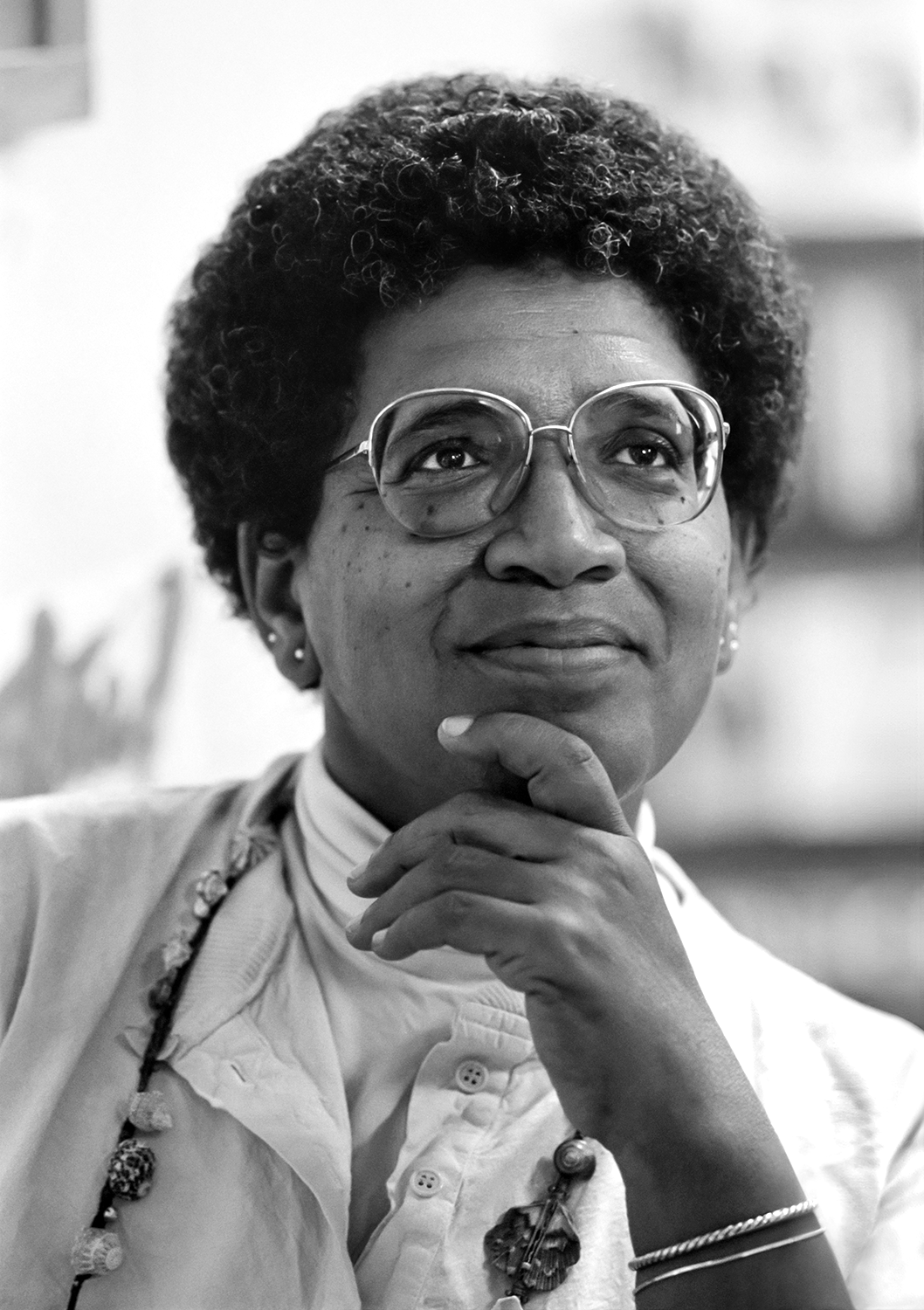
Audre Lorde was a poet, essayist, and activist whose work gave voice to the realities of race, gender, sexuality, and power. Born in New York City in 1934 to Caribbean immigrant parents, she grew up in a world that often tried to silence difference—an experience she transformed into a lifelong practice of speaking truth.
Lorde described herself as “Black, lesbian, feminist, socialist, mother, warrior, poet,” insisting that each identity was essential and inseparable. Her poetry, including Coal and The Black Unicorn, confronted injustice while celebrating resilience, love, and self-definition. In essays, she challenged oppression and urged people to see difference as a source of strength. Her landmark essay, “The Master’s Tools Will Never Dismantle the Master’s House.” argued that real change cannot come from within the structures that sustain inequality.
Her work was deeply personal as well as political. In Zami: A New Spelling of My Name, which she called a “biomythography,” Lorde traced her journey from childhood to adulthood, exploring the evolution of her sexuality and self-awareness with honesty and imagination.
Beyond her writing, Lorde was deeply engaged in movements for civil rights, feminism, and LGBTQ+ equality—pushing feminist spaces to confront racism and urging Black liberation movements to address sexism and homophobia. She taught at Lehman College and John Jay College, where she fought to establish a Black studies department, and later returned to Hunter College as the Thomas Hunter Distinguished Professor. In 1980, she co-founded Kitchen Table: Women of Color Press, creating space for voices long excluded.
Until her death in 1992, Lorde remained a powerful voice for justice—insisting that difference could be a force for transformation.
Photo ©JEB (Joan E. Biren)